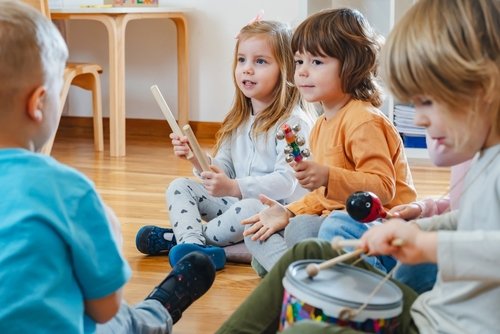
Music and movement are enjoyable activities that can support children’s cognitive, physical, social and emotional development. Dancing, clapping, singing and playing instruments give children opportunities to practice coordination, communication, creativity and self-expression.
At Little Stars Academy Preschool, we incorporate music and movement into our daily curriculum, ensuring that learning is engaging, interactive, and fun. In this blog, we’ll explore why music and movement are so important in early childhood and how they contribute to a child’s overall development.
1. Boosts Brain Development and Cognitive Skills
Music activities engage children through listening, repetition, rhythm and active participation. Here’s how:
• Enhances Memory and Recall: Songs and rhymes help children remember information, improving vocabulary and language skills.
• Improves Math Skills: Music introduces patterns, rhythms, and counting, which lay the foundation for mathematical understanding.
• Strengthens Focus and Attention: Engaging with music requires children to listen carefully and follow along, enhancing concentration and auditory processing.
2. Develops Language and Communication Skills
Music naturally supports language development by introducing children to new words, phrases, and sentence structures. Singing songs, participating in call-and-response activities, and moving to music help children:
• Expand Their Vocabulary: Exposure to lyrics teaches new words and concepts.
• Improve Pronunciation: Singing encourages clear articulation and speech development.
• Understand Sentence Structure: Songs with repeating patterns help children grasp sentence formation and grammar.
3. Enhances Physical Development and Coordination
Movement activities like dancing, clapping, and playing with musical instruments help young children develop fine and gross motor skills.
• Dancing improves coordination, balance, and muscle strength.
• Clapping and finger movements enhance fine motor skills and hand-eye coordination.
• Jumping, skipping, and stretching activities develop flexibility and agility.
4. Encourages Social and Emotional Growth
Music is a great tool for helping children express emotions, build confidence, and develop social skills.
- Group Singing and Dancing Foster Teamwork: Children learn to take turns, listen to others, and work together.
- Music Supports Emotional Expression: Calming melodies can help children relax, while upbeat songs encourage movement and positive engagement.
- Group Participation Builds Confidence: Singing and dancing with peers can help children become more comfortable participating and expressing themselves.
5. Strengthens Creativity and Imagination
Music and movement encourage children to think outside the box and use their creativity. Whether they’re inventing dance moves, making up lyrics, or playing pretend with musical instruments, these activities:
- Stimulate Imagination: Engaging in creative expression helps children develop storytelling and problem-solving skills.
- Encourage Free Expression: Children feel free to move, create, and explore different forms of artistic expression.
- Promote a Love for the Arts: Exposure to music at a young age can inspire a lifelong appreciation for the arts.
How Little Stars Academy Uses Music and Movement in Learning
At Little Stars Academy, we incorporate music and movement in ways that engage and educate:
- Morning Circle Time: We start the day with songs that introduce the daily schedule and reinforce routine.
- Themed Music Activities: Weekly themes include cultural music, rhythm games, and instrumental play.
- Dance and Movement Sessions: Children participate in guided dance classes to enhance motor skills and coordination.
- Interactive Storytelling with Music: Stories are brought to life with sound effects, singing, and rhythmic storytelling.
- Yoga and Mindfulness Music: Gentle melodies accompany relaxation exercises, teaching children how to focus and self-regulate.
Why Parents Choose Little Stars Academy
At Little Stars Academy Preschool in Arleta, music and movement are incorporated into age-appropriate learning experiences:
- Comprehensive Curriculum: We blend music, movement, academics, and social development for a well-rounded education.
- Engaging Activities: Our play-based approach ensures that children learn through fun, interactive experiences.
- Safe and Nurturing Environment: Our preschool fosters confidence, creativity, and curiosity in every child.
- Experienced Educators: Our teachers use age-appropriate music and movement activities to support early learning.
Enroll Your Child in a Music-Rich Learning Environment Today!
Music and movement are enjoyable learning tools that can support children’s cognitive, physical and emotional development. At Little Stars Academy, we incorporate these elements into our curriculum to ensure that children thrive in all areas of growth.
Families are invited to visit Little Stars Academy Preschool in Arleta to learn more about our programs and learning environment.